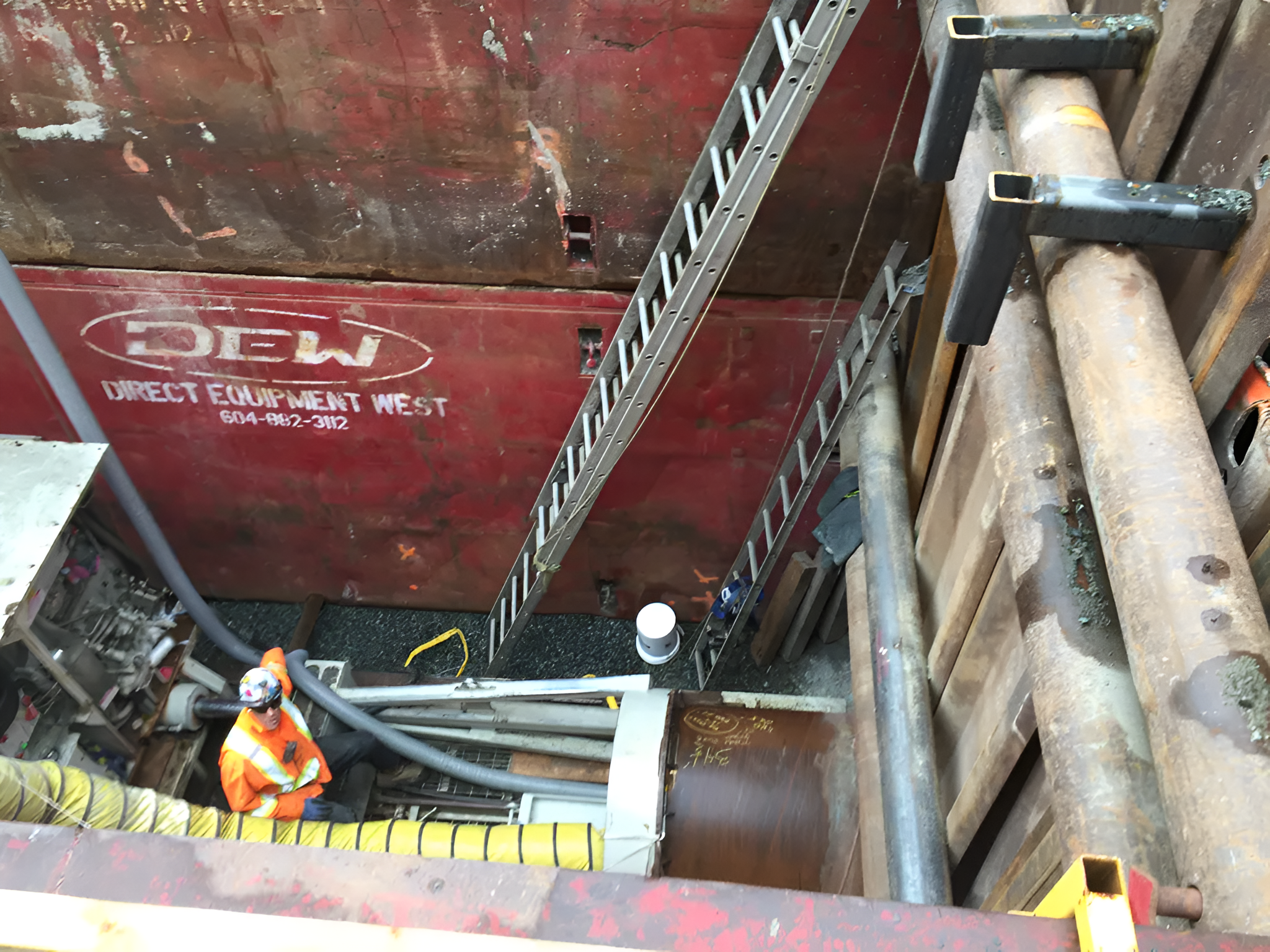
Retaining walls are engineered structures that resist lateral earth pressures and maintain differences in ground elevation. In geotechnical design, they serve a wide range of functions—from supporting road cuts and basement excavations to stabilizing slopes and creating usable flat areas on steep terrain.
Design considerations include:
- Wall Type Selection :
Based on site conditions, loading, and height, options may include gravity walls, cantilever walls, anchored systems, or mechanically stabilized earth (MSE) walls. - Earth Pressure Analysis :
Walls must be designed to withstand active, passive, and at-rest pressures, which depend on soil type, groundwater, surcharge loads, and wall movement. - Drainage and Hydrostatic Pressure :
Proper drainage behind the wall is essential to reduce water buildup, which can significantly increase loading and lead to instability. - Global and Structural Stability :
Designs must satisfy both geotechnical and structural criteria—ensuring resistance to sliding, overturning, bearing failure, and deep-seated slope instability.
- Material and Construction Constraints:
Concrete, segmental blocks, steel, timber, and reinforced soil systems are selected based on durability, aesthetics, and constructability.
In British Columbia, retaining wall design often contends with steep terrain, seismic loading, variable soil conditions, and environmental sensitivities. Coordination with civil, structural, and environmental teams is common—especially on urban or infrastructure projects.
Whether supporting a highway embankment or shaping a residential lot, retaining walls are more than just barriers—they’re engineered solutions to complex ground behavior.