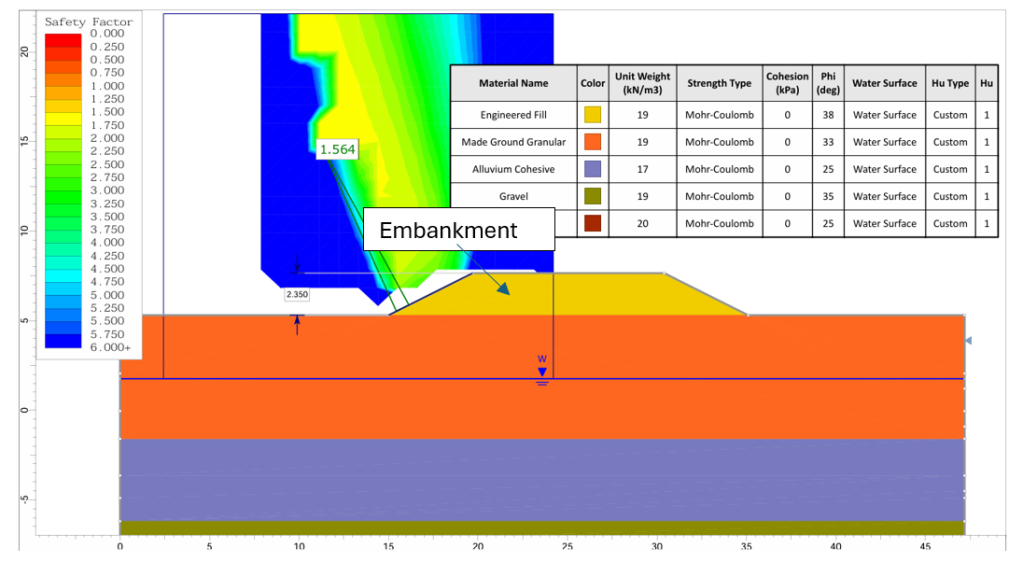
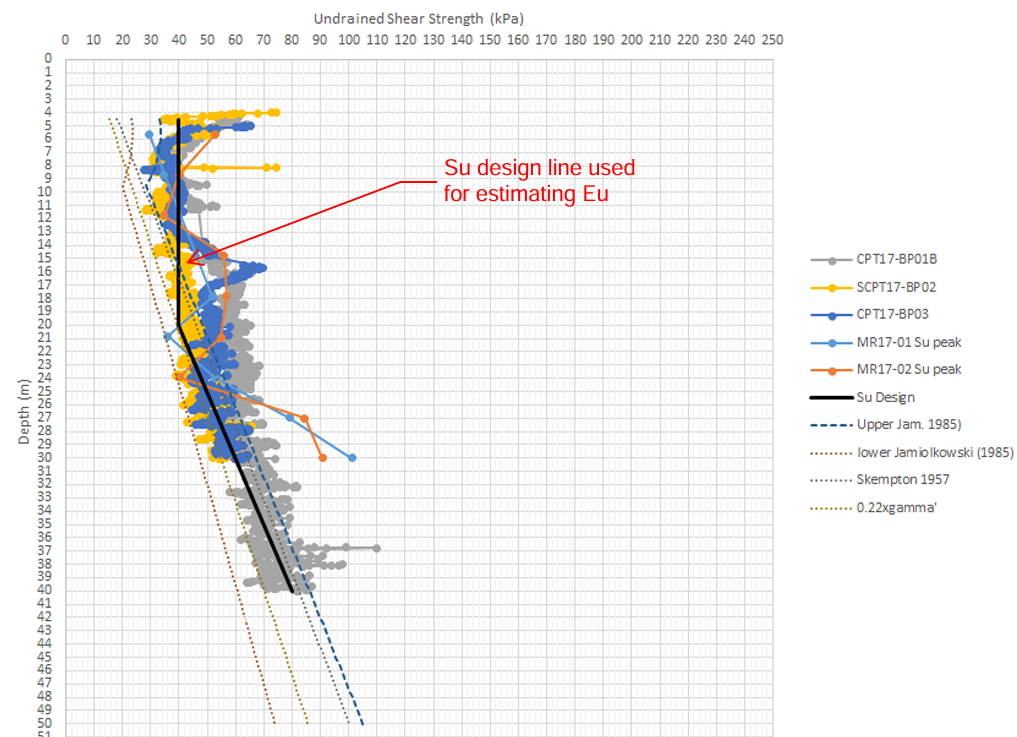
Embankment design involves constructing raised earth structures—typically for roads, railways, flood protection, or site grading that safely support loads and resist deformation over time.
In British Columbia, embankments can be supported on a diverse range of geotechnical conditions, from peat/muskeg soils to soft marine clays and organic silts to dense glacial tills and fractured bedrock.
Key considerations include:
Material Selection:
- Engineered fill must meet compaction, permeability, and strength criteria.
- Local borrow sources are evaluated for suitability and environmental impact.
Geometry & Stability:
- Slopes are designed to balance cut/fill volumes, minimize erosion, and ensure global stability.
- Reinforced earth techniques (e.g. geogrids, soil nails) may be used for steep or constrained sites.
Drainage & Groundwater
- Surface and subsurface drainage systems are integrated to prevent water buildup and reduce pore pressure.
- Seepage control is critical, especially in embankments over low-permeability soils.
Foundation Conditions
- Subgrade soils are assessed for bearing resistance, settlement potential, and slope stability.
- Ground improvement methods (e.g. preload, wick drains, dynamic compaction) may be required.
Environmental & Regulatory Coordination
- Embankments often intersect with sensitive ecosystems, archaeological zones, and urban infrastructure. Measures such as Geosynthetic Reinforced Soil (GRS) can help minimize environmental impacts and integrate more seamlessly with the surrounding landscape.
- Permitting, traffic control, and collaboration with environmental scientists are part of the process.
Designs follow standards such as the BC Ministry of Transportation’s Geotechnical Design Criteria, the Canadian Highway Bridge Design Code (CSA S6:19) and the BC Supplement to CHBDC S6:19. These documents outline factors of safety, seismic resilience, and climate adaptation strategies.
Whether supporting a highway through mountainous terrain or stabilizing a waterfront development, embankment design is about more than moving earth—it’s about engineering long-term performance into the landscape.