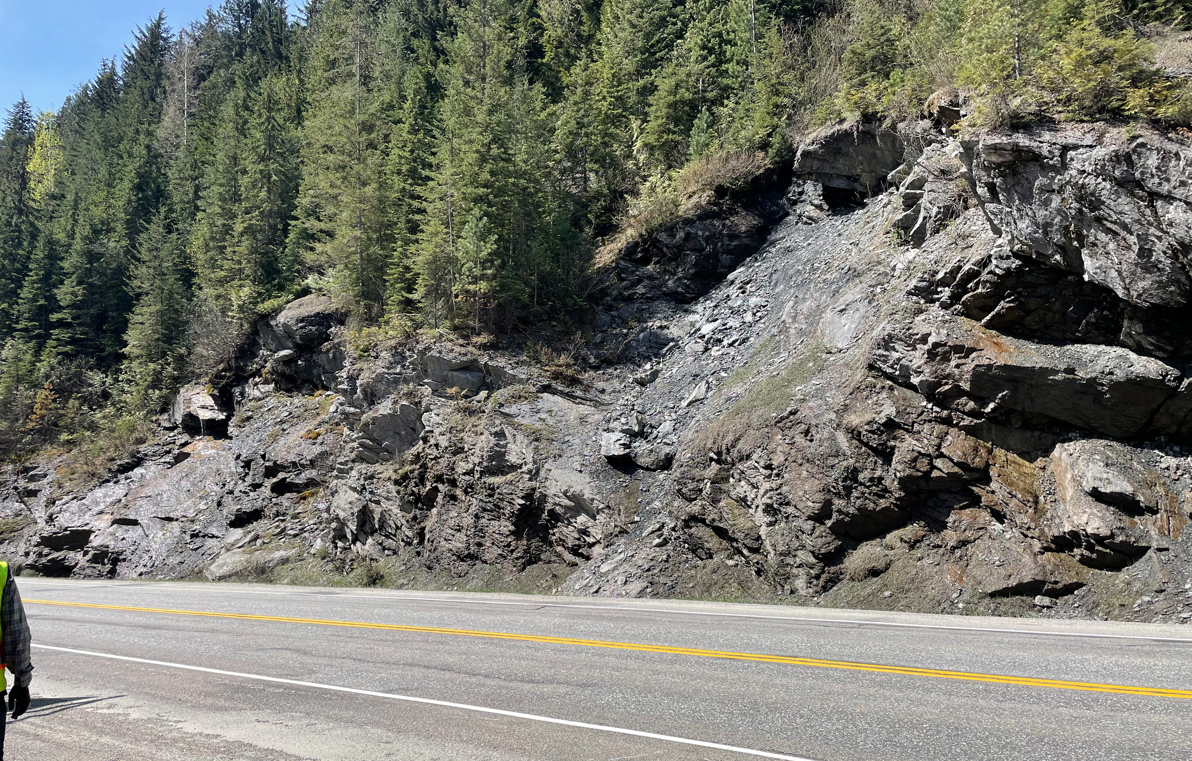
Rock mechanics is the study of how rock masses behave under stress—essential for designing safe excavations in tunnels, slopes, foundations, and underground structures. In British Columbia, where geology ranges from fractured granitic bedrock to layered sedimentary formations, understanding rock behavior is key to managing both natural hazards and construction risks.
Excavation support in rock environments involves:
Using borehole data, geophysical surveys, and classification systems (e.g. RMR, Q-system) to assess strength, discontinuities, and deformation potential.
Includes rock bolts, shotcrete, mesh, anchors, and steel sets—tailored to the excavation geometry, loading conditions, and expected ground response.
Instrumentation like extensometers, inclinometers, and stress cells help track performance and guide adjustments during construction.
Finite element and discrete element methods simulate stress redistribution, failure zones, and support interaction—especially useful in complex or deep excavations.
Rockfalls, overbreak, squeezing ground, and water ingress are common challenges. Support systems are designed to mitigate these while maintaining constructability.
Whether it’s a hydro tunnel, a steep rock cut, or a cavern beneath a city, excavation in rock demands a balance of empirical experience and analytical rigor. Rock mechanics provides the framework to predict behavior, while excavation support ensures safety and performance throughout the construction lifecycle.